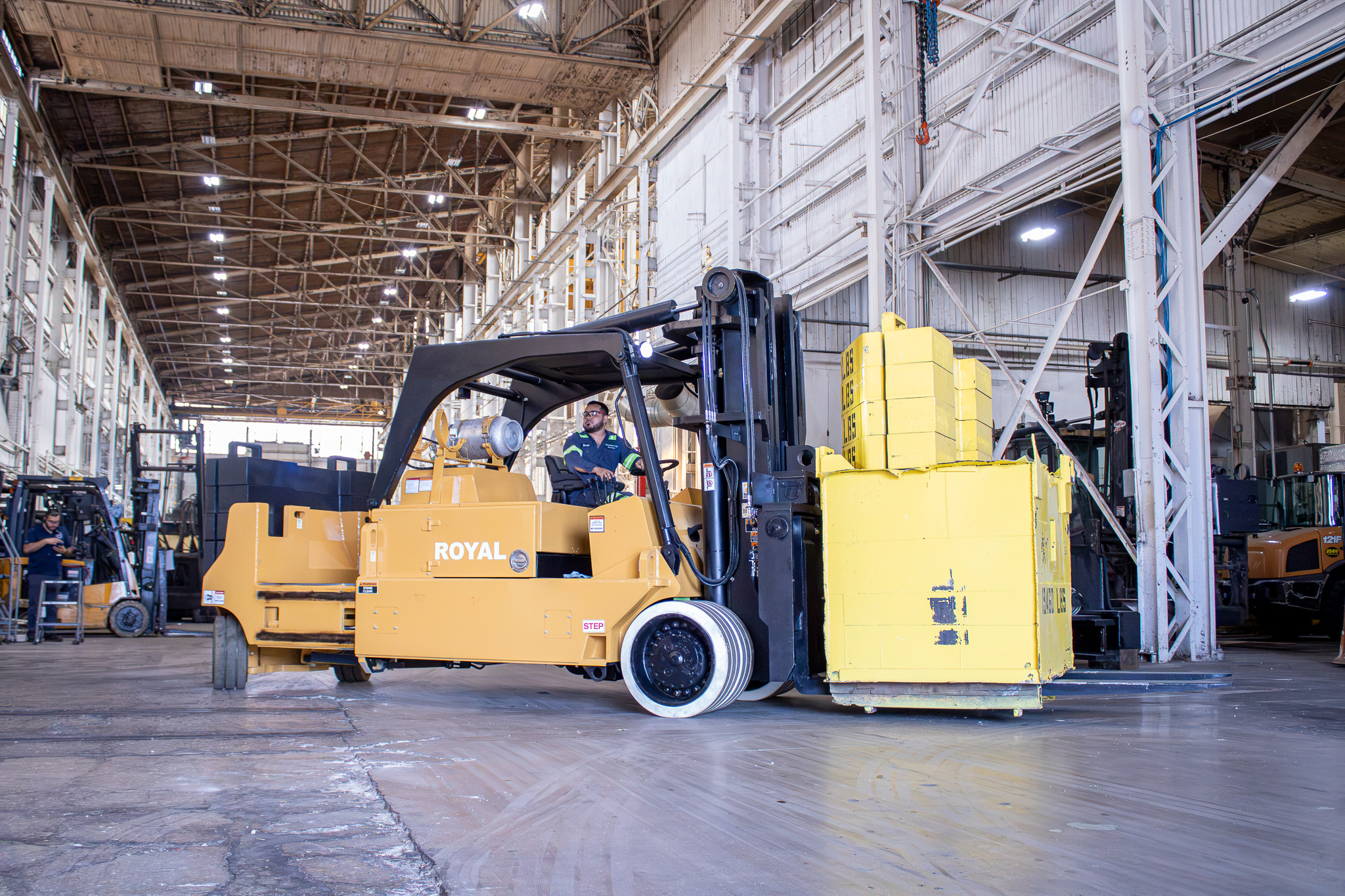
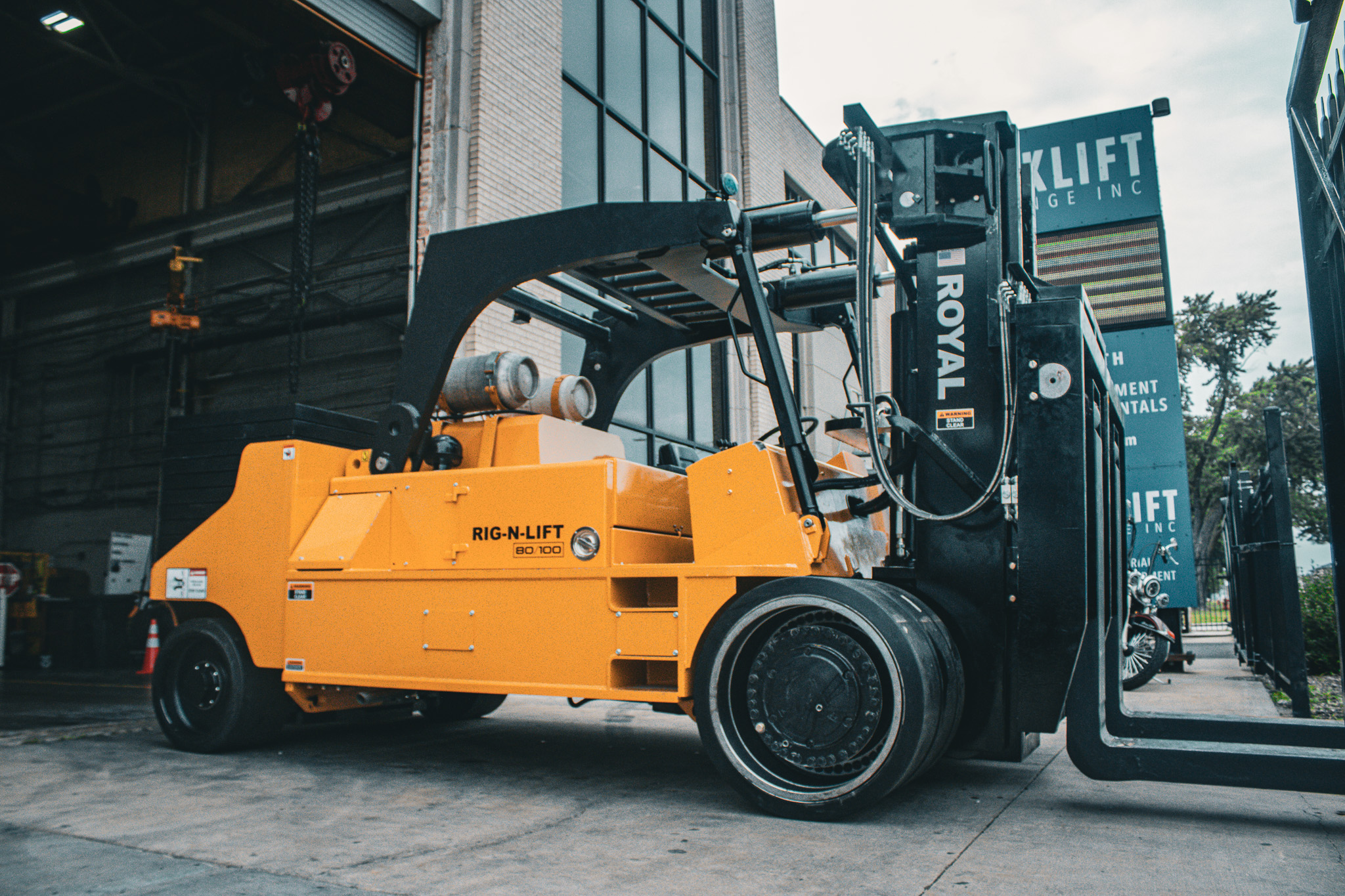
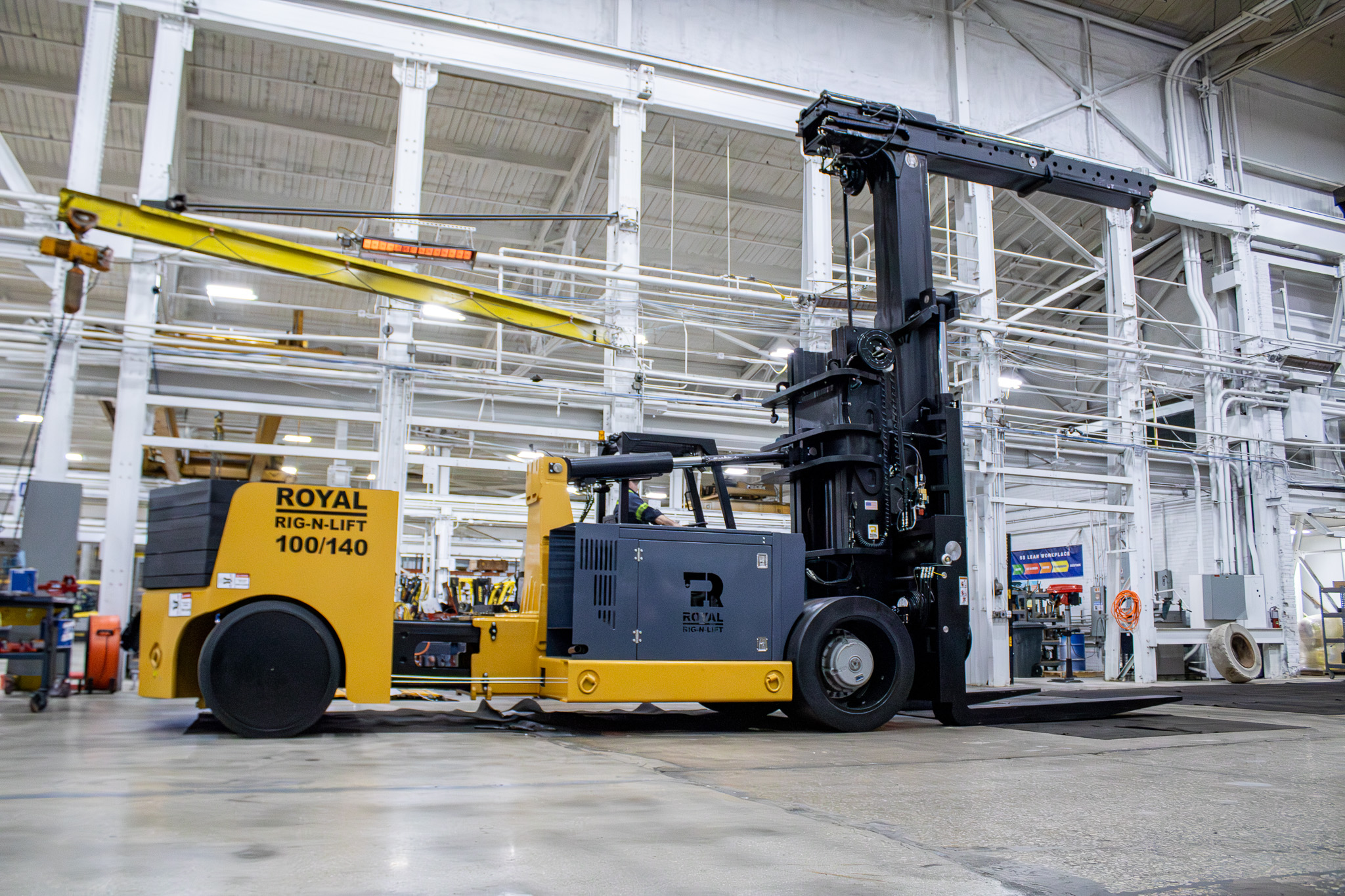
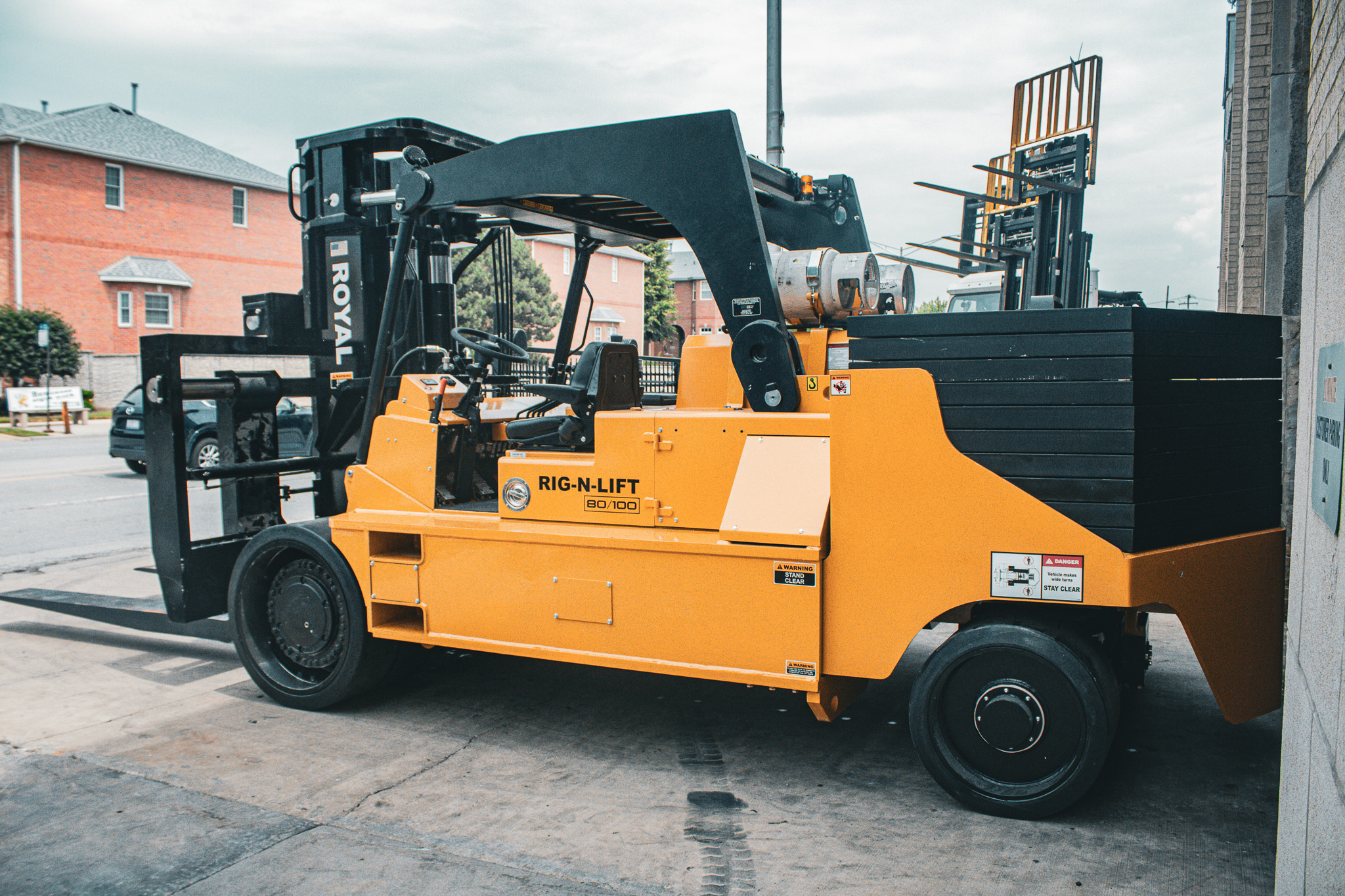
When evaluating a high-capacity industrial forklift, one of the first specifications people look at is its rated lifting capacity. Whether you’re considering an 80,000-pound or 140,000-pound forklift, the published capacity is only one part of the engineering equation.
As soon as the load changes, the lift height increases, an attachment is installed, or the load center moves farther away from the carriage, the forklift’s actual lifting capability changes.
Understanding the difference between rated capacity and actual capacity is critical when handling oversized steel fabrications, heavy machinery, transformers, generators, large castings, or other industrial loads.
What Is Rated Capacity?
Rated capacity is the maximum load a forklift can safely lift under a specific set of operating conditions established by the manufacturer.
Those conditions typically include:
- A specified load center
- Standard forks
- A specific mast configuration
- Defined lift height
- Level operating surface
- Proper tire configuration
- Factory counterweight
When those conditions change, the forklift’s actual lifting capability changes as well.
The Application Is More Important Than the Number
Two facilities may both need to lift 100,000 pounds.
One handles compact steel billets.
The other handles long fabricated assemblies that extend several feet beyond the forks.
Although both loads weigh exactly the same, they create completely different forces on the forklift.
Why?
Because load geometry changes leverage.
That means the second application may require a larger machine—or a completely different truck configuration—even though the weight hasn’t changed.
Load Center Changes Everything
The load center is the distance from the face of the forks to the center of gravity of the load.
As this distance increases, leverage against the forklift also increases.
Think of holding a heavy object close to your body versus holding it with your arms fully extended.
The weight doesn’t change.
The leverage does.
The same principle applies to forklifts.
That’s why manufacturers publish capacities at specific load centers rather than providing one universal lifting number.
Attachments Affect Capacity
Many heavy-capacity industrial forklifts operate with:
- Coil rams
- Fork positioners
- Rotators
- Pipe handlers
- Custom forks
- Specialized attachments
While these tools improve productivity, they also add weight and often move the load farther from the mast.
The result is reduced available lifting capacity.
Every attachment should be considered when evaluating the complete lifting application.
Lift Height Matters Too
Capacity isn’t constant throughout the mast’s travel.
Higher lift heights often reduce available capacity because structural demands increase as the load moves farther from the ground.
That’s why capacity charts exist.
Capacity Charts Tell the Real Story
Rather than relying on one advertised number, capacity charts account for:
- Load center
- Lift height
- Mast configuration
- Attachments
- Fork length
- Operating configuration
For heavy industrial lifting, the capacity chart is one of the most important engineering documents associated with the forklift.
Bigger Isn’t Always Better
A common response to uncertainty is to purchase the largest forklift available.
While additional capacity may provide a larger operating margin, oversized equipment also introduces:
- Higher acquisition costs
- Larger turning radii
- Greater maintenance costs
- More operating space requirements
- Increased energy consumption
The best solution is selecting equipment engineered specifically for the application.
Royal Rig-N-Lift’s Approach
At Royal Rig-N-Lift, we don’t begin by asking:
“How much does it weigh?”
We ask:
- What are the load dimensions?
- Where is the center of gravity?
- How high must it be lifted?
- What attachment will be used?
- How far will it travel?
- What surface will it operate on?
- What does future production look like?
Those answers determine the right forklift—not simply the published capacity.
Final Thoughts
An 80,000-pound forklift doesn’t automatically lift 80,000 pounds in every application.
Neither does a 140,000-pound forklift.
Understanding load center, lift height, attachments, and operating conditions allows engineers and buyers to select equipment that performs safely and efficiently for the real-world application.
If you’re evaluating a heavy lifting project, the application should always drive the equipment selection—not just the number on the nameplate.
Frequently Asked Questions
Does an 80,000 lb forklift always lift 80,000 lbs?
No. The published rating only applies under the manufacturer’s specified operating conditions.
Can attachments reduce forklift capacity?
Yes. Attachments add weight and often move the load farther from the mast, reducing available lifting capacity.
Why does load center matter?
Increasing the load center increases leverage against the forklift, reducing safe lifting capacity.
Can lift height change capacity?
Yes. Capacity often changes as lift height increases.
How should I choose a high-capacity forklift?
Evaluate the complete application—not just the load weight—including dimensions, center of gravity, lift height, travel distance, and attachment requirements.
#HighCapacityForklift #IndustrialForklift #HeavyLift #MaterialHandling #ForkliftEngineering #ForkliftSafety #HeavyEquipment #Manufacturing #SteelIndustry #RoyalRigNLift